| |

| Author |
Topic Options
|
 Posted: Posted: Fri Jul 28, 2017 11:53 am
DrCaleb DrCaleb: Tricks Tricks: DrCaleb DrCaleb: There are those who report a queasiness when eating white flour, but not whole wheat or rye, or vice-versa. Some think it's due to the way that commercial yeasts break down the carbs, and how those are absorbed by the body. I'm not talking celiac disease, just gluten intolerance. https://www.theguardian.com/lifeandstyl ... ac-diseaseI wouldn't be shocked if that's more a reaction to the bleaching agents than the wheat itself. But studies have shown only about 6% of the population have a "gluten intolerance" and 1% being celiac. Not the probably triple that, that claim it. That's what I'm saying though. Let's find out the cause of intolerance, allergies, low sperm counts etc. before we go messing with the food supply and make ourselves extinct!  The problem is, if we don't mess with our food, large portions of the planet will die of starvation. The increased yields we get is supporting our slowly over populating planet.
|

 Posts:
 53994
Posted: Fri Jul 28, 2017 12:09 pm
Tricks Tricks: DrCaleb DrCaleb: That's what I'm saying though. Let's find out the cause of intolerance, allergies, low sperm counts etc. before we go messing with the food supply and make ourselves extinct! The problem is, if we don't mess with our food, large portions of the planet will die of starvation. The increased yields we get is supporting our slowly over populating planet. Most GMOs are modified to withstand glyphosates, not to increase their yield. And most countries experiencing hunger are not because of a lack of food, but by a lack of access to food. There is more than enough food, just too many people who can't afford that food. Some crops are modified to be more pest and drought resistant, but it still comes down to affordability. And there is the hard line; should we continue to feed drought prone areas, producing a generation of nutritionally damaged people who have little prospect at employment, and who's children will face another regular drought cycle in a decade of so? I've seen this opinion from a number of economists - the struggles we see now in Somalia and Sudan are a direct result of the aid we sent in the 80s and 90s to Eastern Africa. But we are veering offtopic again. 
|
Posted: Fri Jul 28, 2017 12:23 pm
DrCaleb DrCaleb: Tricks Tricks: DrCaleb DrCaleb: That's what I'm saying though. Let's find out the cause of intolerance, allergies, low sperm counts etc. before we go messing with the food supply and make ourselves extinct! The problem is, if we don't mess with our food, large portions of the planet will die of starvation. The increased yields we get is supporting our slowly over populating planet. Most GMOs are modified to withstand glyphosates, not to increase their yield. And most countries experiencing hunger are not because of a lack of food, but by a lack of access to food. And glyphosate helps with higher crop yields because of less shit destroying the crop. $1: There is more than enough food, just too many people who can't afford that food. There is more than enough food because of conventional farming. Stop doing that, and there may not be. $1: Some crops are modified to be more pest and drought resistant, but it still comes down to affordability. And there is the hard line; should we continue to feed drought prone areas, producing a generation of nutritionally damaged people who have little prospect at employment, and who's children will face another regular drought cycle in a decade of so? I've seen this opinion from a number of economists - the struggles we see now in Somalia and Sudan are a direct result of the aid we sent in the 80s and 90s to Eastern Africa. But we are veering offtopic again. What's the alternative? Let them die? Or force them to move elsewhere?
|
Posted: Fri Jul 28, 2017 12:33 pm
Sorry Thano's but, we don't need no stinking apocalypse to fix the worlds over population problems. Apparently mother nature will fix it for us. 
|
Posts: 33691
Posted: Fri Jul 28, 2017 1:56 pm
DrCaleb DrCaleb: And there is the hard line; should we continue to feed drought prone areas, producing a generation of nutritionally damaged people who have little prospect at employment, and who's children will face another regular drought cycle in a decade of so? I've seen this opinion from a number of economists - the struggles we see now in Somalia and Sudan are a direct result of the aid we sent in the 80s and 90s to Eastern Africa. But we are veering offtopic again. I didn't give in the 80's, and not giving now. Anyone can see the solution to East Africa, among other places, is NOT any kind of food aid. But try getting the politicians to say that, or for them to give a photo op, or the chance to throw away more taxpayer money. Never going to happen.
|
Posts: 53994
Posted: Mon Jul 31, 2017 6:01 am
Tricks Tricks: DrCaleb DrCaleb: Most GMOs are modified to withstand glyphosates, not to increase their yield. And most countries experiencing hunger are not because of a lack of food, but by a lack of access to food.
And glyphosate helps with higher crop yields because of less shit destroying the crop. Glyphosates are part of the western method of farming, and many around the world can't afford it anyhow. Neither can we. The runoff from them and fertilizers are causing huge areas of the oceans to be incapable of supporting life. Tricks Tricks: DrCaleb DrCaleb: There is more than enough food, just too many people who can't afford that food. There is more than enough food because of conventional farming. Stop doing that, and there may not be. Irrelvant. They still will not be able to afford food they cannot grow themselves. Tricks Tricks: DrCaleb DrCaleb: Some crops are modified to be more pest and drought resistant, but it still comes down to affordability. And there is the hard line; should we continue to feed drought prone areas, producing a generation of nutritionally damaged people who have little prospect at employment, and who's children will face another regular drought cycle in a decade of so? I've seen this opinion from a number of economists - the struggles we see now in Somalia and Sudan are a direct result of the aid we sent in the 80s and 90s to Eastern Africa. But we are veering offtopic again. What's the alternative? Let them die? Or force them to move elsewhere? Yes, and yes. It's hard, but there are parts of the eastern Sahara that just are incapable of supporting farming activities. It's well known, and cyclic and won't be getting any better. If we continue to give them aid in the bad years, that just encourages them to stay in the years farming is supported and sets them up for failure. If we stop bailing them out they will move elsewhere, or perish. martin14 martin14: Anyone can see the solution to East Africa, among other places,
is NOT any kind of food aid.
But try getting the politicians to say that, or for them to give a
photo op, or the chance to throw away more taxpayer money.
Never going to happen. Yup. It sucks, but bailing them out just leaves youth with permanent learning disabilities from starvation in a place with few job prospects and little resources. That how you get Boko Haram and Al Shabab.
|
Posts: 15244
Posted: Mon Jul 31, 2017 6:34 am
N_Fiddledog N_Fiddledog: " The study did not examine causes but scientists believe the amount of chemicals used in everyday products, industry and farming may be behind the crisis." Or...the cucking of the Western male is killing their sperm and turning them into impotent eunuchs. And your morning smoothie just doesn't taste like it used to I bet.
|
Posts: 15244
Posted: Mon Jul 31, 2017 7:50 am
Tricks Tricks:
The problem is, if we don't mess with our food, large portions of the planet will die of starvation. The increased yields we get is supporting our slowly over populating planet.
That's false. The overwhelming majority of staple crops grown are used to feed livestock, not people.70% of corn and grain production is for livestock. Meat can be part of a healthy diet but we westerners over-consume it and over-produce it and it is an extremely inefficient food source and tales a lot more resources to produce. It takes 16 pounds of grain and 25,000 gallons of fresh water to produce just one pound of meat. Of the 30% of food that is produced for human consumption, nearly half ends up in supermarket and restaurant dumpsters or kitchen garbages. The amount of food that gets diverted abroad as "food aid" is statically insignificant and certainly isn't contributing to farmers decisions to use hormones, pharmaceutical, chemicals and GMOs. Let's put the "feed the world " excuse to bed for good.
|
Posted: Mon Jul 31, 2017 11:02 am
BeaverFever BeaverFever: Tricks Tricks:
The problem is, if we don't mess with our food, large portions of the planet will die of starvation. The increased yields we get is supporting our slowly over populating planet.
That's false. The overwhelming majority of staple crops grown are used to feed livestock, not people.70% of corn and grain production is for livestock. Meat can be part of a healthy diet but we westerners over-consume it and over-produce it and it is an extremely inefficient food source and tales a lot more resources to produce. It takes 16 pounds of grain and 25,000 gallons of fresh water to produce just one pound of meat. Of the 30% of food that is produced for human consumption, nearly half ends up in supermarket and restaurant dumpsters or kitchen garbages. The amount of food that gets diverted abroad as "food aid" is statically insignificant and certainly isn't contributing to farmers decisions to use hormones, pharmaceutical, chemicals and GMOs. Let's put the "feed the world " excuse to bed for good. I don't disagree with you, but the crop that's been modified to grow in adverse conditions, or not spoil as quickly is required to feed the people in that part of the world. Meat/animal products are a requirement based on our physiology unless you want to take supplements, so we need to continue producing it, but I agree the consumption of it needs to be curbed. A question I have, that I genuinely don't know, how well does food last in transport/distribution to the areas that are struggling? Is there issue of the food going bad too quickly? $1: Glyphosates are part of the western method of farming, and many around the world can't afford it anyhow. Neither can we. The runoff from them and fertilizers are causing huge areas of the oceans to be incapable of supporting life. I'm gonna need a source for that one. $1: Irrelvant. They still will not be able to afford food they cannot grow themselves. it's not irrelevant if we go from the issue of "not enough money" to the issue of "not enough food". $1: Yes, and yes. It's hard, but there are parts of the eastern Sahara that just are incapable of supporting farming activities. It's well known, and cyclic and won't be getting any better. If we continue to give them aid in the bad years, that just encourages them to stay in the years farming is supported and sets them up for failure.
If we stop bailing them out they will move elsewhere, or perish. You're not wrong. It's like building a house next to the ocean when you get hit by hurricanes 8 times a year. Eventually you're going to have to move, or you're fucked.
|
Posts: 53994
Posted: Mon Jul 31, 2017 11:39 am
Tricks Tricks: A question I have, that I genuinely don't know, how well does food last in transport/distribution to the areas that are struggling? Is there issue of the food going bad too quickly? Depends on the food. Most pulses, rice, wheat etc. won't spoil inside 18 months. White flour doesn't spoil at all. Tricks Tricks: $1: Glyphosates are part of the western method of farming, and many around the world can't afford it anyhow. Neither can we. The runoff from them and fertilizers are causing huge areas of the oceans to be incapable of supporting life. I'm gonna need a source for that one. 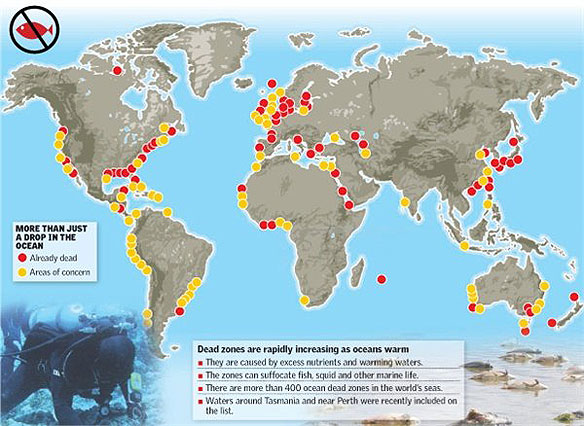 Compare the US Gulf of Mexico and West coast to Africa's southern coasts. Tricks Tricks: $1: Irrelvant. They still will not be able to afford food they cannot grow themselves. it's not irrelevant if we go from the issue of "not enough money" to the issue of "not enough food". Like I and Beave said, there is enough food. They just can't afford it. Look at most of the farmers wiped out by droughts this year in East Africa - they had lots of livestock, but no grasses for that livestock to eat or water for them to drink. And their livestock is their currency, so when the herd died, they had nothing. Now they have no assets, nothing they could sell to buy food for their family. It doesn't matter how much food they - or we - produce, they can't afford it.
|
Posted: Mon Jul 31, 2017 12:40 pm
DrCaleb DrCaleb: Tricks Tricks: A question I have, that I genuinely don't know, how well does food last in transport/distribution to the areas that are struggling? Is there issue of the food going bad too quickly? Depends on the food. Most pulses, rice, wheat etc. won't spoil inside 18 months. White flour doesn't spoil at all. But things like fruits and vegetables. Tricks Tricks: That's an interesting phenomenon I didn't know about! Thought none of them mentioned glyphosate, only fertilizer. And there is engineering being done to reduce the amount of fertilizer needed, to address this exact problem. $1: Or farmers can reduce the overall amount of nitrogen required by employing new biotechnologies, such as the nitrogen use efficiency (NUE) improvements offered by Arcadia Biosciences. By engineering crops to overexpress a gene that allows roots to absorb more nitrogen, Arcadia scientists have shown that "it's possible for NUE crops to produce the same yield with half as much fertilizer," president and CEO, Eric Rey, says. "In canola, we saw a two-thirds reduction."
Tricks Tricks: Like I and Beave said, there is enough food. They just can't afford it. Look at most of the farmers wiped out by droughts this year in East Africa - they had lots of livestock, but no grasses for that livestock to eat or water for them to drink. And their livestock is their currency, so when the herd died, they had nothing. Now they have no assets, nothing they could sell to buy food for their family.
It doesn't matter how much food they - or we - produce, they can't afford it. Definitely agree, trying to farm in an area that doesn't support it isn't exactly smart. But my argument is that organic farming produces about 80% the yield that conventional farming does. Right now, that's still enough, but considering population projections, and (as Beave rightly pointed out) with our waste, is that going to continue to be enough.
|
Posts: 65472
Posted: Mon Jul 31, 2017 12:43 pm
Freakinoldguy Freakinoldguy: Sorry Thano's but, we don't need no stinking apocalypse to fix the worlds over population problems. Apparently mother nature will fix it for us. Don't forget about socialism and communism. They do a pretty good job of eradicating people, too.
|
Posts: 65472
Posted: Mon Jul 31, 2017 12:50 pm
DrCaleb DrCaleb: Compare the US Gulf of Mexico and West coast to Africa's southern coasts. Please do. They're completely different things. The US Gulf coast is a sandy-bottomed sea bed that's almost flat. There's no place for young fish to hide so it's always been a crappy fishery. This is why the US government is going to the expense of creating artificial reefs in the Gulf... https://www.google.com/search?site=&sou ... O9mvZihjs8Add to that the currents in the Gulf bring the warmest water to the Gulf coast and that impacts the larger fish that breed in cold water. It also lends itself to algae blooms which occur with regularity and have always occured with regularity in the Gulf. The odd upside of the warm water and algae problem is that oil spills are rapidly devoured by the aggressive bacteria in the region. Africa's southern coast is rocky and it features colder water and it's a great place for fishing but a crappy place for navigation.
|
Posted: Mon Jul 31, 2017 1:10 pm
Freakinoldguy Freakinoldguy: Sorry Thano's but, we don't need no stinking apocalypse to fix the worlds over population problems. Apparently mother nature will fix it for us. Same thing. The power to stop these things from happening is rapidly falling out of our control. All the probabilities are too quickly turning into inevitabilities for anything to be done to stop them. We dug our own grave. We'll soon have to lie in it.
|
Posts: 15244
Posted: Mon Jul 31, 2017 1:48 pm
Also note that a key suspect in this topic of low sperm counts is BPA, which is not a food additive but found in many kinds of plastics such as water bottles and cans and leeches into food and drinks. . BPA was recently banned in baby bottles but remains perfectly legal in anything else
Of course there are also all kinds of chemicals leeching into you from flame retardants in your furniture and upholstery and other chemicals in your bath products, soap, toothpaste and deodorant etc. And depending on where you live there are various chemicals and heavy metals in the air and dust around you. Each one of us is brewing in our own unique brand of chemical stew depending on where we kive, what we buy and the age of our furniture(petmotted flame retardant chemicals are always changing due to discovered health problems).
So there's a lot going against the human species, the ostrich crowd doesn't want anyone looking into it though, they think that's socialism.
|
 
|
Page 3 of 4
|
[ 50 posts ] |
Who is online |
Users browsing this forum: No registered users and 20 guests |
|
|




 CKA Moderator



 CKA Uber


 CKA Moderator
