| |

| Author |
Topic Options
|
 Posted: Posted: Thu Apr 17, 2014 9:56 am
Delwin Delwin: And with regards to the Constitutional law claim,
"The powers not delegated to the United States by the Constitution, nor prohibited by it to the States, are reserved to the States respectively, or to the people."
These powers were delegated so there is zero argument there. What specific powers were delegated and where? I'm confused. How are we reading Article 4, Section 3 then? It appears like you're claiming there is no such thing as state rights. Are you saying the Feds have all power over all, before a state has any say? I'm pretty confident I've heard learned people, possibly even a founder or two say that's not the case. And again Article 1 section 8 appears to lay out the specific borders of the power Congress has over the states. If you're telling me now there are no such borders, what is the purpose of that Article, and why does it appear before Article 4? Here's another one. I'm just going by memory right now, I'll check after I post, but doesn't Article 4 refer to "New States". What is meant by that? When does a New State stop being new? When would say Nevada starting having say the property rights of say New York, or even North Dakota? $1: And this has already been addressed, so now it's just the recycling of old ideas that have already been proven to be wrong. Addressed by whom? Proven wrong where? I missed it. (Unless you're talking about Peter Griffin?  ) What was the killer argument that could not be challenged? Surely you're not telling me "the debate is over", because you can ask the Global Warming guys how much luck they've been having with that one.
|
Posted: Thu Apr 17, 2014 10:39 am
Yes it has been addressed, In 1976, a dispute over 19 wild burros rounded up on federal land and sold by New Mexico's Livestock Board reached the Supreme Court(New Mexico vs Kleppe). The Department of Interior argued the New Mexico's action violated the Wild Free-Roaming Horses and Burros Act, while New Mexico countered that the Act exceeded the power granted to Congress by the Property Clause of Article IV, Section 3. New Mexico contended that Congress could regulate only those state actions on federal land that threaten to damage public lands. The Court, however, rejected this narrow interpretation. Congress has the power to enact "needful" regulations "respecting" the public lands and--according to the Court---what is a "needful" regulation is a decision "entrusted primarily to the judgment of Congress." The Court concluded the federal government "has a power over its own property analogous to the police power" of the states. The Court did "not think it appropriate [in Kleppe]...to determine the extent to which the Property Clause empowers Congress to protect animals on private lands." https://supreme.justia.com/cases/federa ... /case.html
|
Posted: Thu Apr 17, 2014 10:49 am
The section covers powers regarding new states and federal property, not new states and their federal property. It is comprised of 2 separate clauses.
|
Posted: Thu Apr 17, 2014 11:02 am
But wait a minute... $1: The Clause must be given an expansive reading, for "[t]he power over the public lands thus entrusted to Congress is without limitations," United States v. San Francisco, 310 U. S. 16, 310 U. S. 29, and Congress' complete authority over the public lands includes the power to regulate and protect the wildlife living there.
(b) In arguing that the Act encroaches upon state sovereignty and that Congress can obtain exclusive legislative jurisdiction over the public lands in a State only by state consent (absent which it may not act contrary to state law), appellees have confused Congress' derivative legislative power from a State pursuant to Art. I, § 8, cl. 17, with Congress' powers under the Property Clause. Federal legislation under that Clause necessarily, under the Supremacy Clause, overrides conflicting state laws. And here, though the Act does not establish exclusive federal jurisdiction over the public lands in New Mexico, it overrides the New Mexico Estray Law insofar as that statute attempts to regulate federally protected animals. So again we're back to that stupid turtle, and was it ever in any real danger. But yeah, you're kind of right. The Supremes did appear to say the property clause could override the legislative power bit; at least where federally protected animals were involved. The law does seem kind of flexible here though.
|
Posted: Thu Apr 17, 2014 11:09 am
Delwin Delwin: The section covers powers regarding new states and federal property, not new states and their federal property. It is comprised of 2 separate clauses. But again, what does that mean? Do the feds have the same rights over land in Nevada they have over land in New York? If not, why not? If so, what's with the claim of all that land as public in states like Nevada, but the claim is not made in New York. I posted that map where the whole west was red with public claimed land while the East is white. Why is that necessary if the feds have supreme right over it all in any situation, and there are no state rights West or East?
|
Posted: Thu Apr 17, 2014 11:25 am
Oh, wait a minute again. I think I'm starting to get it. It's this... https://en.wikipedia.org/wiki/Supremacy_ClauseThe Supremes were saying the "supremacy clause", makes the final decision with the burrows right? So that's specific to the burrows, but it could be extended to the turtles as result of the Supremes pulling the trump card of the supremacy clause in the New Mexico burrows case, right?
|
Posted: Thu Apr 17, 2014 12:10 pm
Right this is essentially what was held: We hold today that the Property Clause also gives Congress the power to protect wildlife on the public lands, state law notwithstanding. This is where Art. 6 came into play: Property Clause. Absent consent or cession, a State undoubtedly retains jurisdiction over federal lands within its territory, but Congress equally surely retains the power to enact legislation respecting those lands pursuant to the Property Clause. Mason Co. v. Tax Comm'n of Washington, 302 U. S. 186, 302 U. S. 197 (1937); Utah Power & Light Co. v. United States, 243 U.S. at 243 U. S. 403-405; Ohio v. Thomas, 173 U. S. 276, 173 U. S. 283 (1899). And when Congress so acts, the federal legislation necessarily overrides conflicting state laws under the Supremacy Clause. U.S.Const., Art. VI, cl. 2. See Hunt v. United States, 278 U.S. at 278 U. S. 100; McKelvey v. United States, 260 U. S. 353, 260 U. S. 359 (1922). As we said in Canfield v. United States, 167 U.S. at 167 U. S. 526, in response to a somewhat different claim: "A different rule would place the public domain of the United States completely at the mercy of state legislation."
As can be seen it has been invoked in a number of cases. The tortoise angle is an important part of the argument since there is precedence which is parallel in nature i.e protection of wildlife, but I believe that they would have an argument either way. With regards to the "New States", from what I have read, new states do not have to be admitted with an equal footing to the original states. Some states signed on and got completely jacked, others did not. In the case of Nevada, the clause read something to the effect of all unappropriated lands will become part of the U.S., Whereas Alabama had a decision ruled in their favor such that: to Alabama belong the navigable waters and soils under them So essentially, Nevada did not negotiate the greatest terms upon admission and as a result they have far less private lands. At that point there were already 35 states in the Union so I guess there was less leverage in negotiating. The latter states to join look like they really got jacked: However, at the time of admission, the people whom were there were probably content with the personal lands they held as it would have been far less inhabited than at present. After having read more about it, I will concede that it is not as cut and dry as I originally thought with regards to the state vs. U.S. claims, but barring a landmark supreme court decision with regards to the limitations which the government has to classify a tortoise as "threatened" I don't see a way out for Bundy. After all, the case of the burrows was only 19 burrows and they did not hold a special status. http://en.wikipedia.org/wiki/List_of_U. ... _statehood
| Attachments: |

all_us_public_lands_0-300x230.jpg [ 80.25 KiB | Viewed 416 times ]
|
|
Posted: Thu Apr 17, 2014 12:40 pm
More cute tortoises.
| Attachments: |
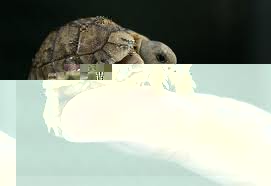
cute little tortoise 3.jpg [ 4.87 KiB | Viewed 412 times ]
|
|
Posted: Thu Apr 17, 2014 2:12 pm
So if the rule of law aspect is about the tortoise, and the claim is the tortoise is in some sort of danger from Ranchers it would not be in from say the creation of a Solar Farm, or say the housing development Harry Reid and family's campaign fraud artist buddy wants to put up, shouldn't there be some evidence of that danger?
As it stands now protect the tortoise from what? Evidence shows it thrives with the ranchers. So far it's only the BLM itself that's been killing them.
Last edited by N_Fiddledog on Thu Apr 17, 2014 2:29 pm, edited 1 time in total.
|
Posted: Thu Apr 17, 2014 2:25 pm
Oh and on a hunch I finally had time to Google that guy who claimed he was going to use women as shields. I suspected he was an "OathKeeper". That's what he is all right. You know about "Oathkeepers" I assume? He's from Arizona. He does not represent the Bundys.
And again - when the Bundy's and their fellow cowboys walked up to those BLM machine gun nests behind the fence with nothing but a believe in the righteousness of their argument for protection there were no women with them.
|
Posted: Thu Apr 17, 2014 3:16 pm
N_Fiddledog N_Fiddledog: So if the rule of law aspect is about the tortoise, and the claim is the tortoise is in some sort of danger from Ranchers it would not be in from say the creation of a Solar Farm, or say the housing development Harry Reid and family's campaign fraud artist buddy wants to put up, shouldn't there be some evidence of that danger?
As it stands now protect the tortoise from what? Evidence shows it thrives with the ranchers. So far it's only the BLM itself that's been killing them.
Well no, the part about the tortoises is part of the reason they have the authority to do what they do with the consultation of experts in the field. They were actually being sued for not doing it because IMO they probably did not even want to open this can of worms. The part about him there illegally is the part where his grazing licence was revoked. The reason he had his licence revoked is because he stopped paying the fees. He stopped paying the fees because they put a limit of 150 cattle on him. This is where the million dollar fine came from. They started to fine him after the court ordered the Bundy family remove all non-permitted livestock by November 30, 1998 or face fines of $200 per head, per day. The family appealed to the 9th Circuit Court—only to be denied in May 1999. At $1.35 per head per month, even if he had 1000 cattle it would have only cost him $16,200 per year. The case isn't about whether the Feds have the authority to decide which animals are in need of protection, it has been established that they do have that right. In this case the decision about the tortoises and why there needed to be limits came from Alan O'Neil: I am familiar with the situation, as I served as superintendent of the Lake Mead National Recreation Area for the National Park Service from 1987 to 2000. In 1993, we reduced the number of cows that could be grazed on the Bunkerville allotment to 150 because of the emergency listing of the desert tortoise as an endangered species.http://www.lasvegassun.com/news/2014/ap ... -not-hero/The complaint towards Bundy is about non payment of fees and his refusal to comply with court orders: (This is from the second complaint put forth by government, after winning the first case and it's appeal) The former Bunkerville Allotment was a grazing allotment located near Bunkerville, Nevada, that encompassed approximately 118,298 acres of public land in the Gold Butte area administered by the BLM. An additional 16,120 acres of land pertaining to the NPS’s Lake Mead NRA also formed part of the former Bunkerville Allotment. The majority of public land acres comprising the former grazing allotment are located within one of the seven ACECs in Gold Butte, known as the Gold Butte (Part A) ACEC. Mr. Bundy’s father at one time held a grazing preference and permit for the Bunkerville Allotment, and Mr. Bundy was an authorized representative for that permit. Following Mr. Bundy’s failure to apply for renewal of
Case 2:12-cv-00804-LDG-GWF Document 1 Filed 05/14/12 the permit in 1993 and failure to pay the requisite grazing fees, BLM cancelled the permit in 1994. As discussed in the preceding paragraph, all of the public lands within the Gold Butte area (with the exception of the Lower Mormon Mesa), including the former Bunkerville Allotment, are now closed to grazing.http://www.scribd.com/doc/217807414/Bundy-II-ComplaintIf you think this case is going to make it to the supreme court you are wrong. The Feds are fully within their rights.
|

 Posts:
 12398
Posted: Thu Apr 17, 2014 3:50 pm
|
Posted: Thu Apr 17, 2014 3:54 pm
Oh and just for the record, the dessert tortoise was listed as endangered by the FWS in 1989 under guess who's administration ? On August 4, 1989, the Service published an emergency rule listing the Mojave population of the desert tortoise as endangered (54 FR 42270). On April 2, 1990, the Service determined the Mojave population of the desert tortoise to be threatened (55 FR 12178). Reasons for the determination included significant population declines, loss of habitat from construction projects such as roads, housing and energy developments, and conversion of native habitat to agriculture.Livestock grazing and off-highway vehicle (OHV) activity have degraded additional habitat. Also cited as threatening the desert tortoise's continuing existence were: illegal collection by humans for pets or consumption; upper respiratory tract disease (URTD); predation on juvenile desert tortoises by common ravens, coyotes, and kit foxes; fire; and collisions with vehicles on paved and unpaved roads.
http://www.fws.gov/nevada/desert_tortoi ... 3_2010.pdfGeorge H.W. Bush, you know, the rancher?
|
Posted: Thu Apr 17, 2014 6:12 pm
$1: The BLM asserts their power through the expressed desire to protect the endangered desert tortoise, a tortoise so “endangered” that their population can no longer be contained by the refuge constructed for them so the government is closing it and euthanizing over a thousand tortoises. The tortoises, the excuse that BLM has given for violating claims to easements and running all but one lone rancher out of southern Nevada, is doing fine. In fact, the tortoise has lived in harmony with cattle in the Gold Butte, Clark County Nevada for over a hundred years, or as long as Cliven Bundy’s family has lived on the land as ranchers. In fact, the real threat to it is urbanization, not cattle.
A tortoise isn’t the reason why BLM is harassing a 67 year-old rancher. They want his land. The tortoise wasn’t of concern when Harry Reid worked BLM to literally change the boundaries of the tortoise’s habitat to accommodate the development of his top donor, Harvey Whittemore. Whittemore was convicted of illegal campaign contributions to Senator Reid. Reid’s former senior adviser is now the head of BLM. Reid is accused of using the new BLM chief as a puppet to control Nevada land (already over 84% of which is owned by the federal government) and pay back special interests. BLM has proven that they’ve a situational concern for the desert tortoise as they’ve had no problem waiving their rules concerning wind or solar power development. Clearly these developments have vastly affected a tortoise habitat more than a century-old, quasi-homesteading grazing area. If only Clive Bundy were a big Reid donor. http://danaloeschradio.com/the-real-sto ... ndy-ranch/Another interesting fact: The siege involving the heavily armed new force of the BLM Bureaucracy happened a few days after Harry Reid's one time senior adviser took over as head of the BLM. Double-check that if you like. I didn't source it. Heard it on television.
|
Posted: Thu Apr 17, 2014 6:40 pm
Yeah, what is left out of your story besides their link to the original story by Associated Press is, it is not a question of the number of Tortoises being too high, quite the contrary, they are still an endangered species and very much at risk of extinction if proper measures aren't adhered to, it is simply a question of their not being funds their to maintain the facility: The Bureau of Land Management has paid for the holding and research facility with fees imposed on developers who disturb tortoise habitat on public land. As the housing boom swept through southern Nevada in the 2000s, the tortoise budget swelled. But when the recession hit, the housing market contracted, and the bureau and its local government partners began struggling to meet the center's $1 million annual budget.
Housing never fully recovered, and the federal mitigation fee that developers pay has brought in just $290,000 during the past 11 months. Local partners, which collect their own tortoise fees, have pulled out of the project.
http://bigstory.ap.org/article/desert-t ... own-refugeMoreover, most of these tortoises in the refuge, were not suitable for release: The animals were once so abundant that tourists would scoop them up as souvenirs. Many quickly realized the shy grass-eaters don't make ideal pets. (For one thing, they can live for 100 years.) And once the species was classified as threatened on the endangered species list, people rushed to give them back.
Former pets make up the majority of the tortoises at the conservation center, where they spend their days staring down jackrabbits and ducking out of the sun into protective PVC piping tucked into the rocky desert floor. Most of these animals are not suitable for release, either infected with disease or otherwise too feeble to survive.And so this really brings us back to our original argument of the importance of paying fees to the BLM so they can maintain the programs in place, as well as, ensuring that appropriate lands are set aside for these beautiful ancient creatures to continue to survive. Note: Your article is what's wrong with journalism. N_Fiddledog N_Fiddledog:
Another interesting fact: The siege involving the heavily armed new force of the BLM Bureaucracy happened a few days after Harry Reid's one time senior adviser took over as head of the BLM. Double-check that if you like. I didn't source it. Heard it on television.
This is completely true. Although I am failing to see the relevance maybe you could enlighten me. Since March 1, 2013, Neil Kornze has been leading the Bureau of Land Management (BLM) as the agency's Principal Deputy Director. Kornze oversees the agency's management of more than 245 million acres of public land nationwide.Before coming to the BLM, Kornze worked as a Senior Policy Advisor to U.S. Senate Majority Leader Harry Reid of Nevada. In his work for Senator Reid, which spanned from early 2003 to early 2011, he worked on a variety of public lands issues, including renewable energy development, mining, water, outdoor recreation, rural development, and wildlife. Kornze has also served as an international election observer in Macedonia, the Ukraine, and Georgia, and he is co-author of an article in “The Oxford Companion to American Law.” http://www.doi.gov/whoweare/blm-dir.cfm
|
 
|
Page 14 of 23
|
[ 336 posts ] |
Who is online |
Users browsing this forum: No registered users and 26 guests |
|
|



 CKA Uber